
A Return To
Pure Muscle.
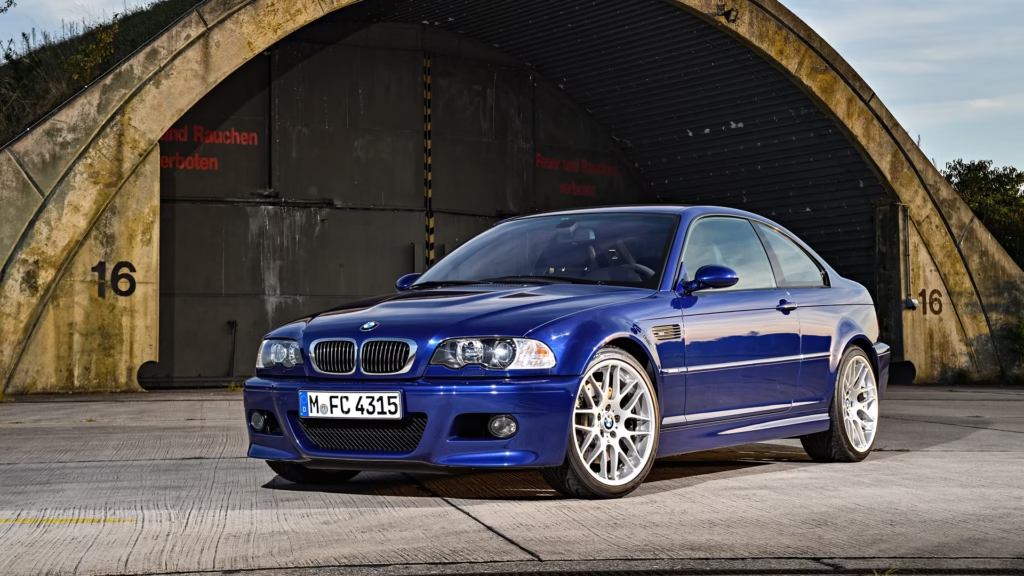
For most driving enthusiasts, the standard BMW E46 lineup represents the pinnacle of the compact executive car. But deep within the halls of BMW M GmbH in Garching, the E46 chassis was merely a blank canvas waiting to be turned into a motorsport icon.
When the third-generation BMW M3 (factory code E46) burst onto the scene in the year 2000, it had a massive point to prove. While its predecessor (the E36 M3) was a phenomenal car, many purists felt its styling was too subdued and too similar to the standard 3 Series. BMW M listened, and their response changed the automotive world forever.
The E46 M3 was a visual and mechanical riot. It completely abandoned the idea of a subtle four-door sedan (which was dropped entirely from the M3 lineup) and was offered exclusively as a wide-hipped Coupe and a luxurious Convertible.
Design: Aerodynamics and Aggression
You could spot an E46 M3 from a mile away. The bodywork was heavily flared to accommodate a significantly wider track and massive tires. But the visual drama wasn’t just for show; it was born in the wind tunnel.
- The Powerdome: The unmistakable bulge on the aluminum hood wasn’t just an aggressive styling cue; it was physically necessary to clear the massive, hungry intake system of the new engine.
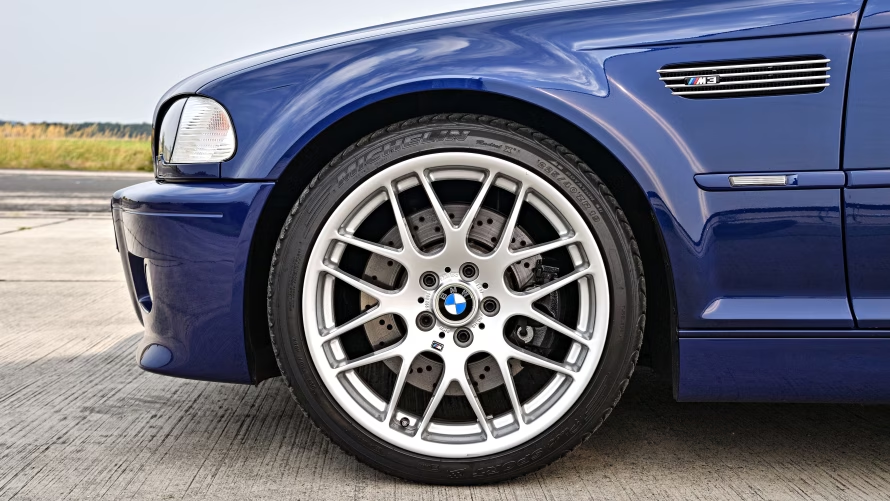
- The Gills: The iconic chrome-plated gills on the front fenders were originally prototyped to extract hot air from the engine bay. While testing proved they weren’t strictly necessary for cooling, designers loved the look so much they kept them. They instantly became a signature BMW M design element.
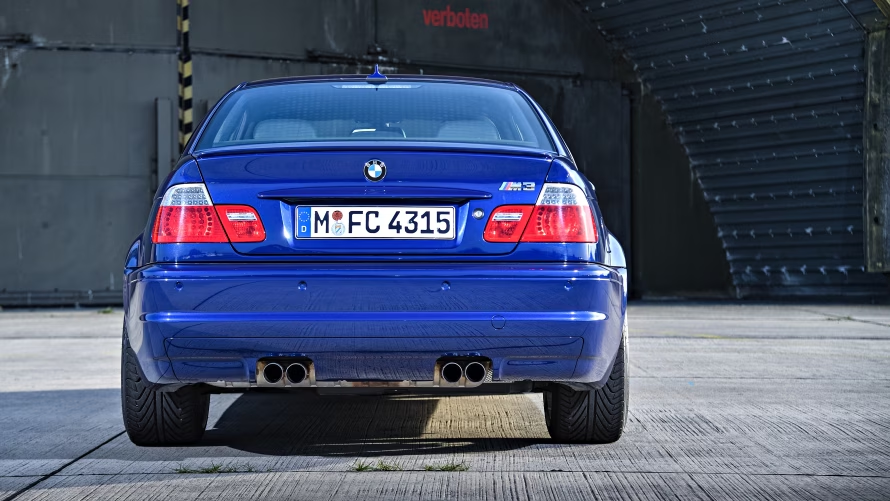
- The Quad Exhaust: For the first time in M3 history, the rear bumper was dominated by four menacing exhaust tips, hinting at the mechanical symphony waiting to be unleashed.
The Heartbeat: The Legendary S54 Engine
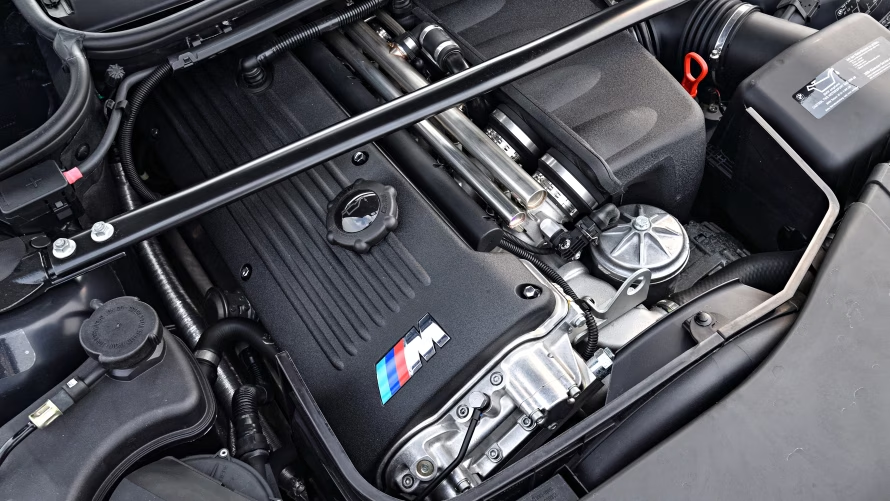
The true masterpiece of the E46 M3 hid beneath the aluminum powerdome: the S54B32.
While it built upon the legacy of previous inline-sixes, the S54 was almost an entirely new development. Displacing 3.2 liters, this naturally aspirated engineering marvel produced a staggering 343 horsepower (333 HP in the North American market) at a screaming 7,900 RPM, and 365 Nm of torque.
Achieving a specific output of over 100 horsepower per liter without forced induction was a monumental feat. BMW achieved this through pure motorsport technology:
- Six Independent Throttle Bodies (ITBs): Giving the engine razor-sharp, instantaneous throttle response.
- Double-VANOS: A high-pressure variable valve timing system on both intake and exhaust camshafts for immense mid-range punch.
- The 8,000 RPM Redline: Creating a metallic, raspy exhaust howl that is still considered one of the greatest engine notes of all time.
The result? The M3 could sprint from 0 to 100 km/h (62 mph) in just 5.2 seconds, pulling relentlessly to an electronically limited top speed of 250 km/h (155 mph).
The Transmission: Manual vs. SMG II
To handle this power, buyers faced a crucial choice. The purist’s option was the bulletproof 6-speed manual transmission, delivering an unfiltered, tactile connection to the drivetrain.
However, in 2001, BMW introduced the future: the SMG II (Sequential Manual Gearbox). Developed directly from BMW’s Formula 1 experience, this electro-hydraulically actuated manual gearbox lacked a clutch pedal. Drivers shifted via steering wheel paddles in a lightning-fast 80 milliseconds. It even featured a variable shift-speed dial and a brutal “Launch Control” mode for perfect standing starts.
Power was sent to the rear wheels through a sophisticated Variable M Differential Lock, capable of transferring up to 100% of the locking effect to a single wheel, ensuring monstrous traction out of corners—and highly controlled drifts.
A Legacy Cemented
Just like the conventional E46, the M3 underwent a mild facelift in 2003. BMW M proceeded very cautiously, introducing only minor updates like modern LED taillights, ensuring the aggressive lines remained untouched.
By the time production ended in 2006, the E46 M3 had sold nearly 85,000 units worldwide. It wasn’t just a commercial triumph; it cemented its status as the definitive analog benchmark, a car against which all future sport coupes would be judged.
The One That
Got Away.
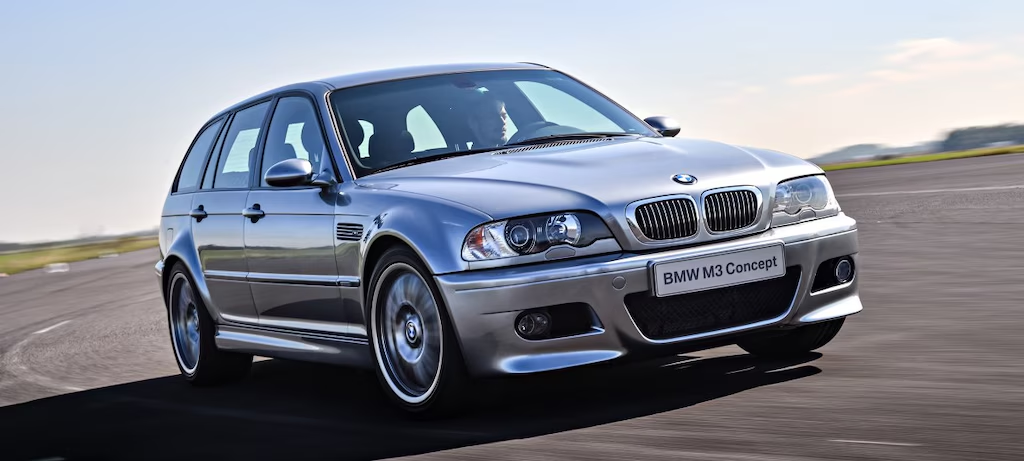
While the Coupe and Convertible bathed in the global spotlight, a small, passionate team of BMW M engineers was working on a secret project behind closed doors: the BMW M3 E46 Touring Concept.
For many enthusiasts, a wagon powered by the S54 engine was the ultimate dream—the perfect fusion of a daily driver and a millennium driving machine. For BMW, however, it was strictly a feasibility study (Machbarkeitsstudie) to see if the immense performance of the M3 could be injected into a family chassis.
Engineering the Impossible
Turning the standard E46 Touring into a fully-fledged M-car presented massive engineering hurdles. The development team had to prove that the complex M3 rear axle could be integrated into the wagon’s load floor. Furthermore, they had to painstakingly adapt the rear doors of the standard Touring to seamlessly merge into the aggressively flared rear wheel arches of the M3. Above all, the chassis had to be reinforced to maintain the immense torsional rigidity required to handle the 343 horsepower of the inline-six engine without twisting the wagon body during hard cornering.
A Masterpiece in Chrome Shadow
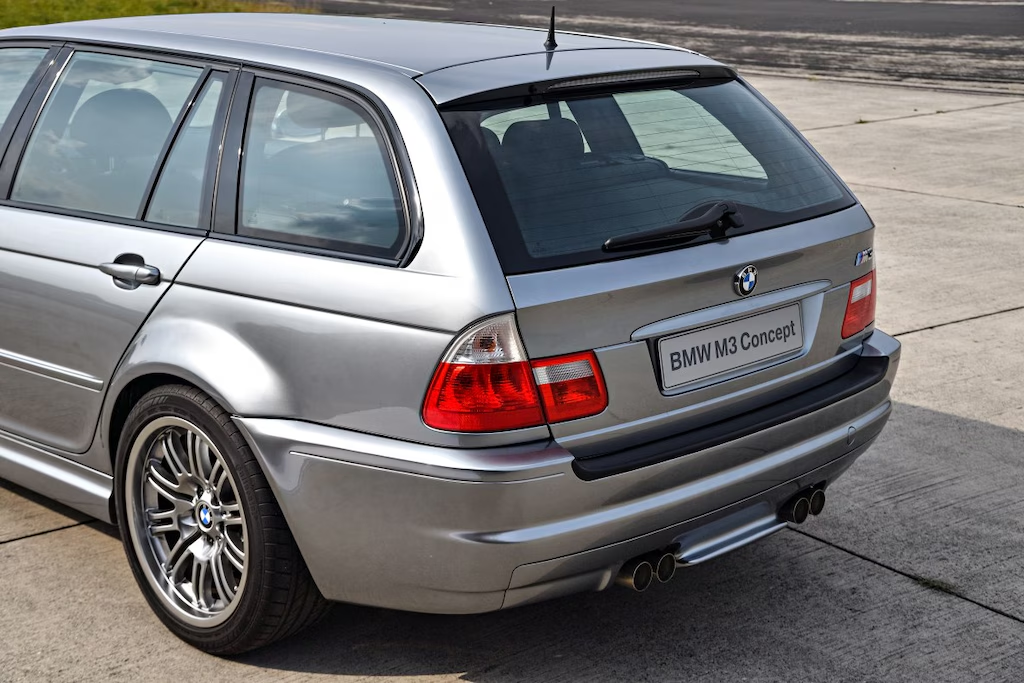
The prototype wasn’t just a rough test mule; it was finished to absolute production quality. It featured all the quintessential M3 hallmarks: the powerdome hood, the wider track, the aerodynamic front apron, the side gills, and the signature quad exhaust.
To make it truly unique, BMW painted the Touring Concept in a bespoke Chrome Shadow metallic. Achieving this liquid-metal effect required a painstaking process: the body was first painted in high-gloss black, followed by a brilliant silver topcoat that highlighted every single muscular contour of the car. It sat perfectly on 19-inch M light-alloy wheels (Style 67).
The Secret Vault
Inside, the concept was just as special. Instead of standard leather, BMW M outfitted the aggressively bolstered seats with Alcantara and a highly exclusive material known as “F1-fabric” (F1-Stoff), which had a unique, metallic tactile feel.
Despite the prototype successfully hitting the test track and proving the concept worked beautifully, the ambitious project never received the green light for mass production. The M3 Touring Concept was locked away in BMW’s secret underground garage, remaining entirely hidden from the public eye for over 16 years until it was finally revealed in 2016.
It remains one of the greatest “what ifs” in automotive history—a purist’s dream that finally laid the spiritual groundwork for the modern BMW M3 Touring (G81) decades later.